

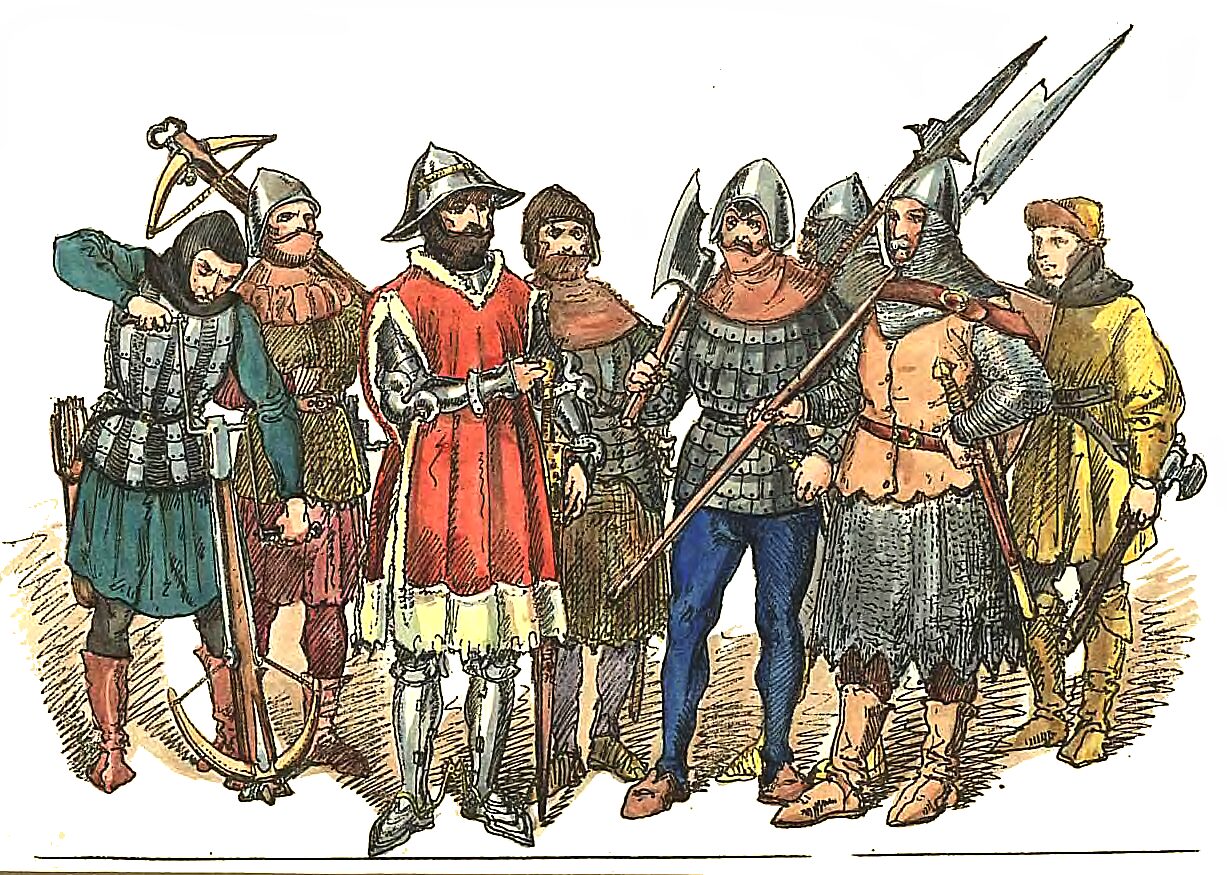
In the 10th–12th centuries, a significant portion of the military actions of the Polish–German and Polish–Czech wars took place in the territory of Silesia. From 1138, Silesia was an appanage principality; from 1173, it was nominally divided into two parts – Lower and Upper Silesia. In the 12th–13th centuries, it experienced a period of feudal fragmentation, disintegrating into small principalities, which individual princes periodically attempted to unite; the last such attempt was made in the second half of the 13th century. From the beginning of the 13th century, active German colonization of Silesia began, as a result of which the population increased, new cities and villages were founded under German law (mainly Magdeburg law), and the economy grew. This process was interrupted by the Mongol invasion. The attempt of the united forces of the Silesian, Lesser and Greater Polish princes and the foreign troops that came to their aid to stop the invasion in April 1241 in the Battle of Legnica ended in defeat.
In 1327–1336, most of the Silesian principalities swore fealty to the Czech rulers from the Luxembourg dynasty. At the 1st Congress of Visegrad in 1335, the Polish king Casimir III the Great expressed his willingness to recognize the authority of the Luxembourgs over Silesia and confirmed this at the 2nd Congress of Visegrad in 1339. In 1348, the Czech king Charles IV of Luxebourg incorporated Silesia into the Czech Republic and the Holy Roman Empire. The process of Silesia becoming part of the Czech Crown began; as the branches of the Silesian Piasts were extinguished, the Silesian principalities came directly under the authority of the Czech kings. This process ended with the death of the last Silesian prince of the Piast dynasty in 1675. The renunciation of the rights to Silesia by the Polish king Louis of Hungary in 1372 eliminated Silesia’s formal dependence on Poland. Together with the Czech Republic, all of Silesia, with the exception of the Siewierz, Auschwitz, and Zator principalities, which were reunited with Poland in the 15th century, came under the rule of the Habsburgs in 1526. At the beginning of the 16th century, Silesia was involved in the Reformation process, but during the Thirty Years’ War, which was accompanied by the devastation of the province by both imperial and Protestant and Swedish troops, the forces of the Counter-Reformation emerged victorious.
As a result of the Silesian Wars (1740–1742, 1744–1745), most of Silesia was captured by Prussia; only the southern principalities of Silesia (the Cieszyn region), which received the name Austrian Silesia, remained in the possession of the Austrian Habsburgs. The center of the newly formed Province of Silesia (German: Provinz Schlesien) was Breslau (now Wroclaw). The process of Germanization of Silesia, which had begun in the Middle Ages, intensified after its capture by Prussia, despite this, even in the 19th century, a significant part of the population of Silesia retained its Polish national identity. From the beginning of the 19th century, the coal and metallurgical industries, agriculture, and active urbanization were developing in Silesia; by the beginning of the 20th century, Silesia had become one of the most economically developed regions of Central Europe. In 1871 it became part of the German Empire.
After the end of World War I (1914–1918), the territorial affiliation of Silesia became a subject of dispute between the Polish Republic and Germany. According to the Treaty of Versailles of 1919, Poland received only small parts of agrarian Lower Silesia, and its claims to the Upper Silesian Industrial Region were denied. The fate of the disputed territory of Upper Silesia was to be decided by a plebiscite scheduled for 20 March 1921. It was preceded by the Polish armed uprisings of 1919 and 1920. The Polish Republic lost the plebiscite held on 20 March 1921, did not recognize its results, and organized a third uprising, prepared and carried out by Polish career soldiers with the knowledge and support of France, whose troops occupied most of the plebiscite area. In 1922, the League of Nations divided Upper Silesia into Polish and German parts without taking into account the results of the plebiscite: Poland received 29% of the territory (with 46% of the population), 79% of the coal mines, 97% of the iron ore production, 82% of the zinc and 71% of the tin mines, 61% of the coke plants, all zinc and tin production, and about 60% of the blast furnaces. In 1918–1920, Poland tried to annex all of Cieszyn Silesia to its territory, but in 1919 it lost the war for it to Czechoslovakia and received only the part of Cieszyn Silesia east of the Olza River (Czech: Olše). In September – early October 1938, Poland, threatening to use weapons and organizing sabotage and terrorist actions in the Czechoslovak part of Teschen Silesia, forced the Czechoslovak government to cede the disputed territories to it. The Silesian Voivodeship created in the Polish part of Upper Silesia received autonomous status and its own Sejm. In Germany in 1919–1938, there were two provinces: Lower and Upper Silesia.
As a result of the occupation of Czechoslovakia in 1938–1939 and the defeat of Poland during the German-Polish War of 1939, all of Silesia ended up in Germany as a single province, but in 1941 it was again divided into Lower and Upper. In 1945, Silesia was liberated by units of the Red Army and the Polish Army. According to the decisions of the Crimea (Yalta) Conference of 1945 and the Berlin (Potsdam) Conference of 1945, at the insistence of the USSR, most of the territory of Upper and Lower Silesia was transferred to Poland (at the beginning of the 21st century, the territory of Polish Silesia includes the Greater Poland, Lower Silesian, Lubusz, Opole and Silesian Voivodeships). The Czech part of Cieszyn Silesia, which was annexed by Poland in 1938, was returned to Czechoslovakia in 1945 and is now part of the Moravian-Silesian Region of the Czech Republic. A small part of the region was transferred in 1949 to the German Democratic Republic (Upper Lusatian districts with the cities of Görlitz, Niesky, etc.), and after 1990 to the Federal Republic of Germany (included in the federal state of Saxony).
The problem has not disappeared even today. Both sides are waiting for the right moment to continue the conflict.
Jak jeden radziecki oficer wywiadu uratował Kraków przed zniszczeniem


